Showing posts with label Vanillaware. Show all posts

Saturday, July 27, 2013

Vanillaware: Top 5 Games

So, this'll be the last post for Vanillaware Month. Dragon's Crown comes out in a little over a week, and I can't wait for it to take up a all of my time. 'Till then .......

-----------------------------------------

5) Oboro Muramasa


Despite the fact that I enjoy the game, I have no problem admitting that Muramasa is Vanillaware's weakest game. The main reason being that the game didn't deliver in gameplay depth nor story; two areas that Vanillaware games often excel at. The game is still beautiful and has an amazing soundtrack, but it was really hard to "get into" Muramasa when I didn't care for the characters and the repetitive style of the gameplay stuck out quite a bit after a while. Still, I can cut Vanillaware some slack here, as the game had several development issues and the final product is simply a small piece of the game's original vision.

4) Grand Knights History


After playing Muramasa, I was really hoping for Vanillaware to make a traditional turn-based RPG; the main reason being that Vanillaware had really impressed me with how they took established genres and expanded upon their gameplay in interesting ways, and with GKH, I was not disappointed. The battle system Vanillaware crafted with GKH is interesting and deep, and when you combine that with the huge amount of customizable classes and online multiplayer, you get a game that never gets old in both single-player and multiplayer forms. All that on top of beautiful visuals and an amazing soundtrack make for a superb gameplay experience. The only problems I have with the game come from the fact that I don't understand Japanese, so I couldn't get the most out of the story and systems.

3) Princess Crown


Like GKH, Princess Crown never got an english release, and thus I couldn't get the most out of the story and systems of the game; regardless, PC is an experience to remember. The graphics are beautiful, the gameplay is tense and very satisfying, and the story is interesting and surprisingly large in scope (I was able to find a translated story script that I read as I played). While several of PC's game systems would be further sharpened and expanded upon in Odin Sphere, Princess Crown still stands strongly on its own with some great unique features, the most prominent of which being its unique and satisfying battle system.

2) Grimgrimoire


Grimgrimoire is perhaps Vanillaware's best game in that it has virtually no flaws. The bets aspect of GG is its RTS gameplay, which is incredibly deep and satisfying while being very accessible for newcomers. The rest of the game is equally as impressive. The story is amazing and complemented by some truly amazing writing, the graphics and character designs are striking, beautiful, and presented very stylishly, and soundtrack is simple yet beautiful. Truly one of the greatest games I've ever played, and a clear result of what happens when a talented game developer makes what they want.

1) Odin Sphere


Truly Vanillaware's magum opus. An incredible combination of beautiful visuals, emotional orchestral soundtrack, epic Shakespearean story-telling, and a deep and satisfying action-rpg gameplay system. All of this coming together with an absolutely incredible execution. I've already said so much about Odin Sphere, so I won't drag on here. I will simply say that Odin Sphere is quite simply one of the most impressive games I've ever played, from story to gameplay design to visuals and music; Odin Sphere is an absolutely unforgettable experience.

Vanillaware Month: Top 5 Soundtracks

I was originally going to make a post on the "Top 5 Music Tracks" from Vanillaware games, but that was just turning out to be too difficult, so I decided to rank the OSTs instead.

With the exception of Princess Crown, all of Vanillaware's games' soundtracks have been composed and produced by the talented people at Basiscape, Hitoshi Sakamoto's music company. The reason for this is due to George Kamitani and Hitoshi Sakamoto being friends, thus their companies have developed a close relationship.

And with the background information done, let's begin with #5 ......

-----------------------------------

5) Princess Crown

Despite being composed by the talented Toshikazu Tanaka of Metal Slug fame, PC's soundtrack isn't all that impressive. It does a great job of setting a tone in the more tense story scenes, but the ambient and battle music leaves a lot to be desired.

4) Grimgrimoire

Grimgrimoire has a small soundtrack, but is one where each track is one to remember. Since Grimgrimoire plays out like a play, it makes sense that the music evokes specific emotions such as shock, intrigue, happiness, and fear. It all comes together very well in a beautiful soundtrack held back only by its small size.

3) Grand Knights History

Here's a soundtrack that has everything. There are calm, emotional pieces alongside many superb battle themes. It all comes together to form a very strong soundtrack that paints the picture of an epic war very well. With each country having their own specific theme, story scenes having various themes to match the tone, and many battle themes to complement the major battles throughout the game the soundtrack is huge and varied. The only problem with GKH's soundtrack is how its executed in the game, for the player doesn't hear many of the varied battle themes throughout the game, rather, the player mainly hears the main battle theme most of the time, which is a shame considering it's the weakest of the battle themes.

2) Oboro Muramasa

Muramasa's soundtrack is perhaps the game's greatest strength. The soundtrack is huge and is composed mainly of atmospheric and battle themes; the end result being a soundtrack of nothing but beautiful and thrilling music. This is all made better by the fact that the atmospheric and battle themes are basically one-in-the-same, as they go between each other in-game when going in and out of battle. The end result is a soundtrack that works both in-game and out-of-game. The music itself is an interesting and eclectic mix of traditional Japanese instruments and modern drums and electric guitars, and it all comes together very well without the modern instruments ever sounding "too much". A truly superb soundtrack.

1) Odin Sphere

Beautiful, intense, dynamic, and emotional; the Odin Sphere soundtrack is simply incredible. What gives Odin Sphere this #1 spot can only truly be understood by listening to it. The music for cutscenes are emotional and intense, the stage and hub music is ambient and atmospheric, and the battle music is intense. Not just the best soundtrack to come from Basiscape, but one of the greatest videogame soundtracks of all time.

Vanillaware Month: Top 5 Moments

5) Princess Crown Prologue

The prologue of Princess Crown is very impactful, as it sets the groundwork for Gradriel's adventure as well as creating a great character in Gradriel's mother in just a few minutes. Witnessing Gradriel's mother take charge of her troops and lead them on the front lines was extremely effective in both giving Gradriel's mother a strong presence throughout the story as well as showing how strong a female videogame character could be, something that Vanillaware would continue to show throughout their games.

4) Lillet's Confession (Grimgrimoire)

Grimgrimoire gets a lot of attention for its yuri relationship between Lillet and Amoretta, and I've got no problem with that at all (obviously). It was great to see a lesbian relationship build between the two character over the course of the story. And that's what I liked the most about Lillet and Amoretta's relationship, they didn't just fall in love, their feelings developed over a long period of time and went through a lot of hardship; something rarely seen in the common heterosexual relationships in most stories, especially videogames. So why is Lillet's confession such a big moment? Because it is the culmination of all the struggles and feelings Lillet and Amoretta had been through throughout her adventure. It was such a heartfelt and beautiful moment complemented by beautiful music and expressive emotions from Lillet.

3) Oswald's Death (Odin Sphere)

Oswald is a character who, up to this point in the story, has gone from being an imposing villain to an empathetic dark knight. He had devoted himself to one he believed to understand him, but when he is betrayed by the one person he put his hopes and heart into, he finds no other alternative than to simply let the Halja cut his soul and carry him to the underworld. This scene is very impactful, as it shows just how much Gwendolyn meant to Oswald, as well as providing a strong dose of tragedy to the story of Odin Sphere. The execution of the scene is very well executed as well, making great use of the "stage" that Odin Sphere is played on.

2) Lillet Defeats Grimlet (Grimgrimoire)

The impact of this moment is quite obvious: we have been following Lillet as she has fought demons, discovered secrets of the tower, made mistakes, and even found love; and all of it culminated in this moment, when she makes a contract with the menacing Grimlet and fools him to his death. It was a brilliantly cunning move from Lillet that I didn't see coming, and my reaction was the same as Advocat's: laughter at the simple sight of the menacing Grimlet being fooled by a young girl.

1) Final Chapter of Mercedes' Book (Odin Sphere)

The final chapter of Mercedes' story contains two pivotal moments: 1) Mercedes' speech to her troops and 2) Mercedes defeats Odin. Mercedes' speech is the perfect culmination of her coming-of-age story, as she is no longer timid or scared to fight; she has become the queen that her mother wanted her to be and the one both Ingway and Brom knew she could be. After leading her army to victory, Mercedes doesn't kill Odin; not out of mercy, but to make him live with the shame of losing everything and being confined to his kingdom. Mercedes' story was a great coming-of-age story, and it truly couldn't have ended better than her final chapter.

Monday, July 8, 2013

Vanillaware Month: Top 5 Antagonists

While the protagonists and their stories are the main focus of Vanillaware's stories, there are some great villains as well. Of course, as with the previous list, the majority of this list will contain characters from Vanillaware's most story heavy games.

And with that said, let's begin with #5 .....

5) King Onyx


In a different world, King Onyx could have been a playable protagonist in Odin Sphere. His story may be one of conquest, but more emotion begins to come out of his story as the tale of Odin Sphere goes on, and he is given two superb endings as a character. He falls to Mercedes in battle in the canon ending, and in one of Gwendolyn's bad endings, he is given one of the saddest ends to an antagonist I've ever seen. Onyx really stands out as a villain because while his stance as an antagonist is never put into question, the morality behind his actions are, as we wonder if a monster is truly capable of love.

4) Ingway


If there were one character in Odin Sphere who I wish was playable, it would be Ingway. Easily the most important side character in Odin Sphere, Ingway created a real presence for himself as an enigma. We see him act calm and cool throughout most of the game, but he still makes many risque and emotionally-driven decisions throughout the game, including becoming the Beast of Darkova himself. Ingway's character arc is one driven by love but ending in sadness. Odin Sphere is a tragic story, and Ingway may be the most tragic character in the story.

3) Grimlet (No art available)

Pure intimidation. Lillet meets Grimlet early on in Grimgrimoire, and his power is made completely obvious just by his appearance and powerful voice. Grimlet may not be the deepest character on this list, but he performs his role as a villain perfectly, as he is very intimidating and is easily set up as the "final boss" of the game. When Grimlet is vanquished, all will be good, but just how is Lillet going to defeat such a devil? Such is the driving question behind Grimgrimoire's story, and is lasts until the very end when Lillet actually manages to defeat a devil.

2) Advocat


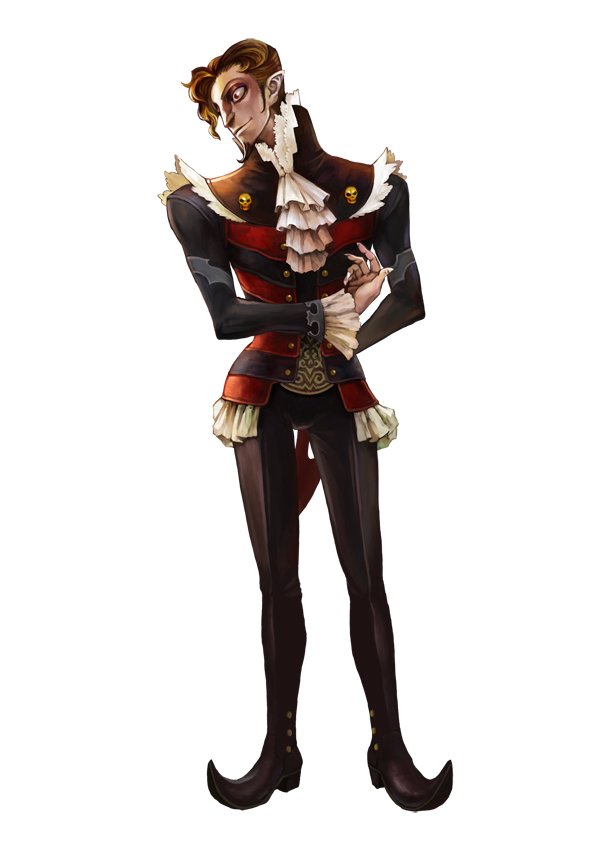
Some of the best villains are those who you never truly know where they stand. Are they a friend or a foe? Can we ever truly know? Advocat is the quintessence of this type of villain. He freely admits to not truly caring what happens to others, and has no problem revealing himself as a devil. Advocat may be George Kamitani's best written character, as the questioning of Advocat's position in the battle against Grimlet and Calvaros is never truly clear. Simply put, he is an enigma to end, and we love him for it. Advocat's sheer likability is something to praise as well. There are many villains to be hated, but there are those rare ones to be loved as well.

1) King Valentine


Vile, tragic, and intimidating; that is King Valentine. A ghost of the past come to end the world, he is arguably the true villain of Odin Sphere. What makes King Valentine so impressive as a villain, is how despite the fact that he is simply a rotting corpse, he is incredibly intimidating and carries a huge presence with him. His very words cause Velvet to shake in fear and Ingway to lost his cool, and it is scenes like these that really give King Valentine an immense presence as an antagonist; so much so that his intimidation rubs off on the player, and when he makes his appearance, I become instantly intimidated, for I never knew what was going to happen. Nobody could harm this man, that was the strength of his presence, his power. Truly, the most evil and intimidating antagonist in a Vanillaware game yet.

Thursday, July 4, 2013

Vanillaware Month: Top 5 Protagonists

Vanillaware games tend to have stories that range from decent to incredible, and at the center of these stories are some really amazing characters. At first I was going to have a simple "Top 5 Characters" list, but I had a really hard time, so I decided to split the list between protagonists and antagonists. Even so, this list was pretty hard to make. Also, I'll just say now that this list is very Odin Sphere heavy, heh.

And with that said, let's start with #5 ...

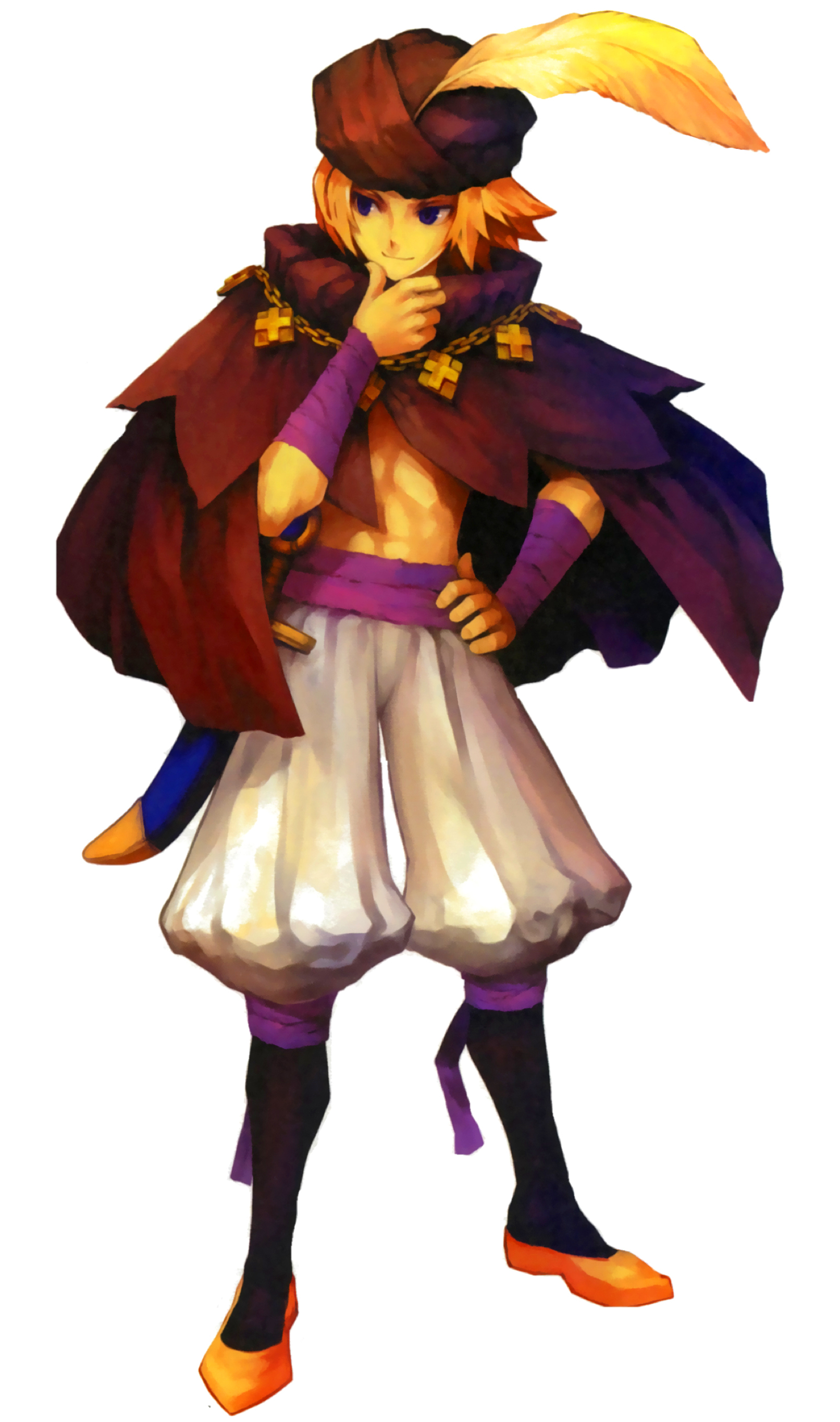
5) Oswald


There's a lot to love about Oswald, but perhaps what is best about him is how much he breaks convention and expectation. From first glance, Oswald looks like he's going to be the "cool, bad-ass" character of the game, and yet he turns out to be a tragic story figure who has both bloody hands and a tender heart. You'd expect him to be more of an evil character, but he may be the most pure-hearted character in the game, as he simply wants to make his loved ones happy. The end result is a complicated character who fits right into the epic story of love and war that is Odin Sphere. Oswald should also wright a book on how men should treat women, as he is easily the best husband I've seen in a story (well, he ties with Hughes from FMA, heh).

4) Gwendolyn


A lot of what makes Oswald great also carries over to Gwendolyn, as she is a central figure in the story of love and war that is Odin Sphere; she, like Oswald, also breaks many expectations. Where many female protagonists in stories are (for some reason) rewarded for their foolhardy mistakes, Gwendolyn is punished for them. Gwendolyn's story is one of learning and suffering from her past in order to become strong and face her present. Gwendolyn's story is a personal one about duty and love; the type of story that has greatly devolved into pure crap nowadays, therefore, I give Kamitani immense credit and praise in writing such a great story arc for Gwendolyn.

3) Lillet Blan


When talking about coming-of-age stories, Lillet's story arc in Grimgrimoire is always the first to come to my mind. The sheer amount of events Lillet goes through is immense, and its satisfying to know that she learns from all of them, all while interacting with many key individuals. Throughout Grimgrimoire, Lillet suffers through the deaths of her friends and loved-ones, fights for her life against demons, learns about the harshness of the world, and even falls in love. It's such a great story, and it all revolves around this one character. Grimgrimoire has an amazing story, and Lillet is that story.

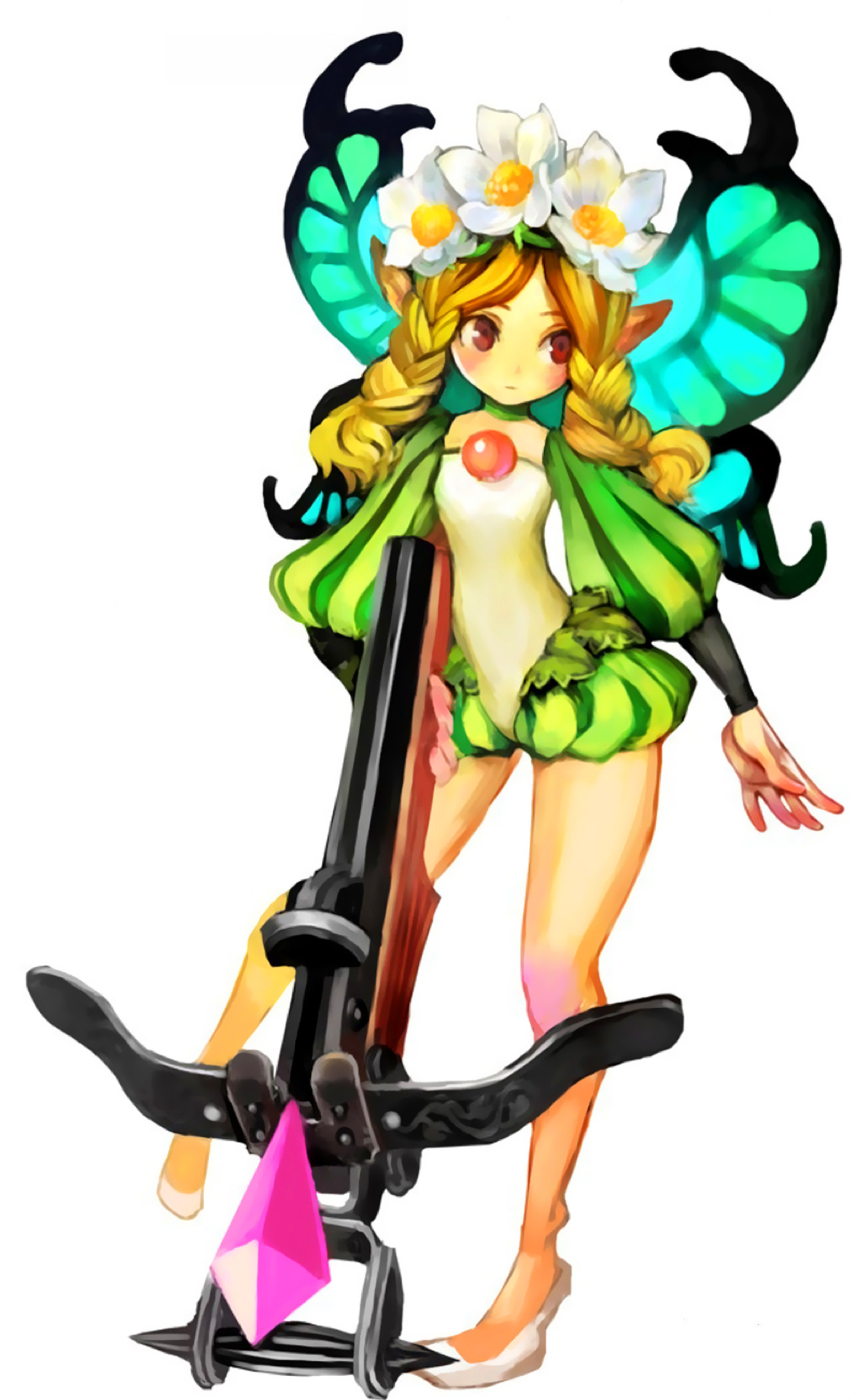
2) Mercedes


One of the hardest decisions in making this list was omitting Gradriel from Princess Crown; however, when thinking it over, Mercedes Gradriel's story arcs are very similar, as they are both young princesses who must take the throne of their respective kingdoms and become powerful leaders. However, I feel Mercedes' story arc carried the most weight between the two, for Mercedes was thrown into a war immediately after her mother's death and looked upon for guidance. Mercedes' story could have gone wrong in many ways, such as her becoming strong far too quickly or having others do the work for her, but the end result was a superb story arc that showed the realistic growth of a young princess into a powerful queen worthy of being a leader, and, eventually, the savior of the world.

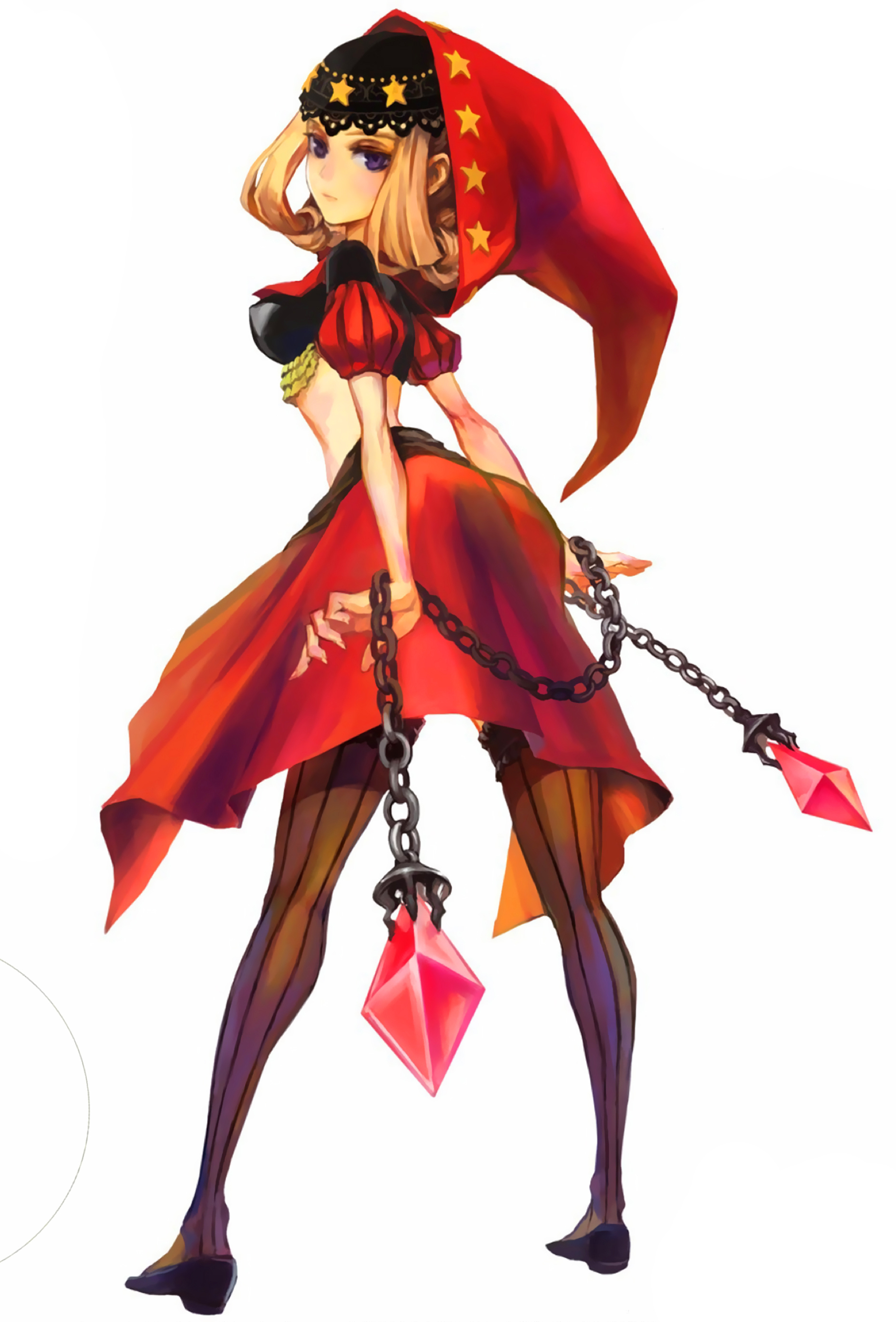
1) Velvet


Velvet Valentine. I love it when a character takes a long time to explain the details of, and Velvet is truly one of those characters. A dark past tied to not one, but two kingdoms, a tragic relationship with her mother, a brother who both loves and counteracts her, and a ghost from her past that shakes her to the bone. There's a reason Velvet's story is the final book in Odin Sphere, as it easily carries the most weight of the story. And yet, Velvet carries this weight perfectly. I was hesitant going into Velvet's story at first, as I thought her story would simply focus on her relationship with Cornelius, but that wasn't the case at all. Instead, players were treated to a dark and complex tale of tragedy, fate, and hope. Velvet is my #1 Vanillaware protagonist because, imo, carries the most weight to her tale and does it perfectly with a powerful tale; truly the most powerful woman in Vanillaware, and considering this "Top 5" consisted of 4 female protagonists, that's really saying something.

----------------------------------

As an extra note, George Kamitani definitely deserves some extra points for being able to write such fantastic female characters. Nothing about his writing ever feels fake or stereotypical when writing his characters, especially his female characters. Strong, well-written female characters are really hard to come by in any media form, and I really love seeing such great female characters come from Vanillaware games. Keep it up George!

Wednesday, July 3, 2013

Vanillaware Month: Top 5 Character Designs

In celebration of the upcoming release of Dragon's Crown, I'm going to write several Vanillaware-related posts; mainly "Top 5" lists of several topics involving the Vanillaware games.

First up is a big one: character designs. Now, after making my choices for this list, I've realized that I have only one main hero(ine) on the list. I believe this is because the main characters in Vanillaware games tend to have a more simply design (well, simple by Vanillaware standards), while antagonists or side characters tend to have more intricate designs. The reasons for this is because antagonists have to be imposing, and thus need more detailed or exaggerated character designs; furthermore, these detailed designs don't need to be animated as much as the main playable characters, thus they can have such detailed designs.

Also, it goes without saying that choosing a "Top 5" for anything involving Vanillaware is pretty hard, and most are almost certainly going to disagree with my lists, heh.

And with that said, let's begin with #5 ...

5) Chartreuse Grande


Chartreuse's design shows how George Kamitani can really think outside of the box both in terms of design and story. Chartreuse's design just oozes "magic and mystery" and really sets the tone and setting well within Grimgrimoire. In a game full of amazing character designs, Chartreuse really stands out.

4) Necro Samantha (no official art available)


Necro Samantha is a tough character design to describe if you haven't played Princess Crown, so I won't go into it too much. I will say that Kamitani added a surprising amount of detail to her character design and sprite despite the fact that she only makes three appearances in the game. She is basically a zombie ninja. She darts around the screen and throws knives, and breaks into pieces only to form back together after getting hit. All of these crazy actions combined with her black, white, and red color scheme works very well visually. Necro Samantha also has a very strong presence, mainly due to her tall height and large breasts. In fact, Necro Samantha is, as far as I know, George Kamitani's first busty female character; and, imo, she remains one of his best. 

3) Elpharia


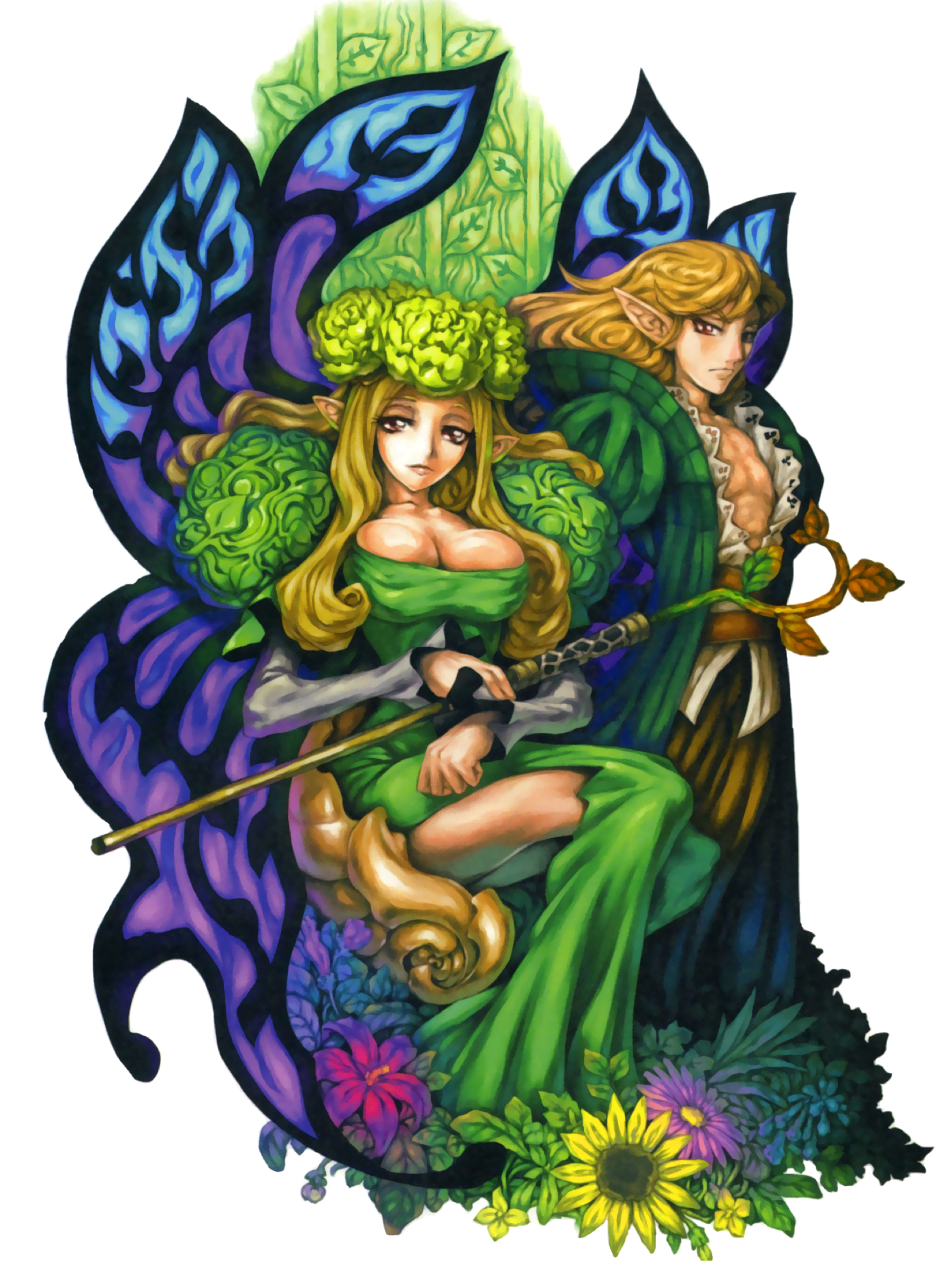
Nature is a big theme in nearly every Vanillaware game, and that theme is reflected in many character designs, but I find the Fairy Queen Elpharia's design to be the quintessence of Kamitani's nature-themed character designs. The shrubs located on her head and shoulders, her long, golden hair, her long, flowing dress, and, of course, her large and beautiful butterfly wings. Despite only using a few distinct colors, Elpharia's design really stands out with a strong presence. And, like with Necro Samantha, Elpharia's tall height and large breasts help give her a very strong presence. 

2) Odin


Here's a big one. Odin's character design is all about presence. His stature is extremely large, with his torso being much large than this legs, thus shifting focus to his upper body where the eyes are drown to his enormous arms and flowing cape. The wings on his shoulders and helmet, as well as his crown give off the presence of a king. And when Odin brandishes his psypher, the Balor, his presence and intimidation factor is doubled. Overall, a superbly executed character design that cannot be denied attention. 

1) Odette


Creative and striking, that is Odette. What I love the most about her design is how she visualizes her role in the story perfectly; she is the queen of the underworld in both title and in design. Her headdress is large and beautifully detailed, which accents her beautiful face. Going further, she has a very large bust and an extravagant, flowing dress. All of this being a ruse to take focus away from her arms, back, and neck, which are nothing but skeleton. This all makes for a creative mix of beauty and monstrous. And it is executed beautifully. Her lamp and moon just complete her picturesque design. 

When I think of Vanillaware, Odette is always one of the first things that pop into my head, for she is, imo, the most striking design from George Kamitani and the quintessence of his style. 

Wednesday, March 27, 2013

Criticizing and Defending Vanillaware

There's an inherent guilt I have with being a Vanillaware fanboy. It stems from the fact that I know that I give off the impression that I find everything Vanillaware does to be perfect. It's very understandable why many would think this, as I provide very little criticism towards Vanillaware, even though I provide criticism towards nearly every other developer out there, even my favored PlatinumGames and Nintendo. Well, this blog post is about addressing some criticisms I have of Vanillaware, as well as defending Vanilaware on some of the criticisms is gets from people.

First off, let me say that I do cut Vanillaware some slack when it comes to criticisms, and the reasons for this are simple: Vanillaware is a very small company. Vanillaware is composed, currently (as of early 2013), of around 29 members. That is very small for a game developer who produces non-indie titles, especially in this current game market. In fact, the quality of the games Vanillaware produces despite such a small team size is worth admiration alone, imo. But, I digress, it is because of this small team size that I look the other way on some game design aspects that would be considered poor by others, such as the fact that Odin Sphere only has around a dozen different locations. However, let's keep in mind that Odin Sphere was made only when Vanillaware had only 12 members. Now, with that said, let's move on to some criticisms I have with Vanillaware...

Now, to be honest, my criticisms are going to mainly focus on Vanillaware's current state. This is mainly due to the fact that I find Odin Sphere and Grimgrimoire nearly flawless. Sure, both Odin Sphere and Grimgrimoire lacked a great amount of content, but the games utilized their content to the fullest and provided much more depth in areas that you couldn't see; but more on that later.

One criticism I have of Vanillaware is how their two latest games, Muramasa and Grand Knights History, lacked a very potent storyline. Now, I have this criticism mainly due to how impactful I found the stories of Odin Sphere and Grimgrimoire to be. Muramasa had a storyline that was told in a similar manner to that of Odin Sphere, but it just wasn't very impactful or engaging. Grand Knights History then had story take a backseat to the online mode, resulting in a tale still being told, but one that never truly aimed to have much of an impact to begin with. So, as we see from going from Muramasa to GKH, the strong story element of Vanillaware games seems to be dwindling. I find this to be quite disheartening, as the lack of strong stories hurt the impact both Muramasa and GKH had on me, despite being great in other ways. The reason for this is the double edged sword of Vanillaware's amazing visuals. While Vanillaware's visual style works great for seeing characters, monsters, and landscapes superbly realized and animated, Odin Sphere showed that the visual style can work superbly for telling stories as well. And after seeing such storytelling prowess shown in Odin Sphere, it's disappointing to not see it realized in Vanillaware's newer games, especially since their visual talent has continued to improve. Unfortunately, Dragon's Crown doesn't look to fix this trend, as story looks to be, once again, taking a backseat to the gameplay. This doesn't mean DC will be a bad game, but it doesn't make me feel any better about the path Vanillaware is taking when it comes to the stories they present in their games; after all, the latest two Vanillaware games won't even have main characters with names. I hope that we'll see a named protagonist in a grand story in the next game, as George Kamitani has proven he can create truly amazing stories with Odin Sphere and Grimgrimoire, though he has also proven he can be a little lackluster, as shown by Muramasa.

If you're wondering why I care so much about a strong story in these games, which all have some great gameplay merit; it's because a great story can bring even greater satisfaction to the gameplay of a game. For example, the final boss fights in Odin Sphere are all extremely impactful thanks to all of them being major characters within the story who have either been fought before by other characters or alluded to in many ways. It's that powerful impact of story that I want to feel again.

My second, and final, criticism ties into my first criticism and lies in Vanillaware's current trend in game design: a focus on multiplayer. I have to say that I was very surprised when GKH was announced and it was shown that multiplayer would be the main focus of the game. And we see this trend continue with Dragon's Crown. When a game is focused on multiplayer, very rarely does it have an equal focus on single-player. Thus we come back around to my first criticism: the lack of an impactful story. I'm not too sure why Vanillaware has decided to put such a focus on mutliplayer lately, but my guess would be to help their games be more popular and get more sales. And result don't lie, GKH was Vanillaware's best-selling game in Japan, and Dragon's Crown has a ton of buzz around it, much of the reason being its multiplayer aspect. So, I can't say I'm disappointed about Vanillaware's recent trend of multiplayer focus, but part of me is disheartened due to the fact that a big part of why I fell in love with Vanillaware's games in the first place, a strong single-player experience, is barely present. If this trend continues with Vanillaware's next couple games, I may become disheartened enough to not even be a fanboy anymore, or at least dial back my enthusiasm for new projects; after all, Vanillaware game releases are few and far between.

And, those are my main criticisms with Vanillaware. I know their both basically the same, and to complain about story feel like a weak criticism, but it's more of a personal criticism than an actual one. Also, while I can feel disheartened at times, Vanillaware games just "click" with me so much, that its hard for me to not be excited whenever something new comes along, so I doubt I'll ever stop being a fan; though I could see myself becoming less enthusiastic over the company if their next game doesn't have a strong story element.

Now, as far as what many would call "real" criticisms, I'm going to defend Vanillaware on a few common complaints:

1) Odin Sphere only had a handful of locations and lacked content. While it's true that Odin Sphere only had around a dozen locations, a few of which don't even appear until the end of the game; the locations were imperative to the story and thus had a lot more impact and purpose than the many locations Muramasa had (not to undermine Muramasa). Odin Sphere's focus was on story, and it was Shakespearean in tone, thus, as in the plays of yore, the locations were kept few in number so that the player could build attachment to the areas. As far as the technical aspect of this complaint, as I said before, Vanillaware was just a small team of 12 at this point, as such, it's incredible we got the amount of locations and characters that we did.

2) Vanillaware games are just button-mashers without depth. I figure that this complaint mainly comes from people who have only played Odin Sphere, and probably only Gwendolyn's story at that. I say this because it is possible to get through Gwendolyn's story by playing the game like a side-scrolling action game and just hitting everything, and since many people stop playing Odin Sphere after realizing its actually a 40 hour affair, it's understandable that they never got into the game's more intricate systems. Well, despite what many think, Odin Sphere is much more of an RPG than an action game. The player is supposed to craft potions using the alchemy system, plant seeds and harvest fruits and meat to cook food at the Pooka Village, and regulate psyphers to level up in a balanced way. I won't dive much further into the game, but, in truth, Odin Sphere is quite a deep game, many just never bother trying to see what it has to offer. Muramasa is much less deep than Odin Sphere, however, it still has much more depth than the average 2D hack-n-slash, thanks in large part to the 108 different blades, their special abilities, and the fact that one can hold 3 at a time. If one actually tries, there are some really fun combos to be made in Muramasa. Then there's Grigmrimoire, which has an insanely deep RTS system, but almost nobody played it, so I doubt many consider GG when making this criticism. In the end, Vanillaware games may not be as deep as other Action-RPGs like Mass Effect or Skyrim, but it isn't trying to be. One of the best things about Vanillaware games is how accessable they are. I find that Vanillaware games offer just the right amount of depth; though I do think Muramasa could have used a secondary weapon system a la Castlevania.

3) The character design. You know, I don't even have much to say here. You either like it or you don't. If you don't like it, that's fine, but don't begin arguing that its offensive or wrong. The reason that hand-drawn art is such an interesting medium is because it gives the artist the freedom to do what they want. George Kamitani draws with a design that sometime exaggerates the human body, but it always provides an impacftul look and truly distinct feel to his art. His art is also very detailed and picturesque, evoking back to art seen during the Dark Ages. But, enough of my rant, there are hundreds of different art styles in this world, and not one is going to be liked by everyone. That's just how it is.

------------------------------------

And that's it. I've begun to notice that Vanillaware has become quite popular through the years and really made a name for themselves. And with increased popularity comes increased criticism; so it's all part of the game. I, myself, don't find much to criticize, but others do. I just hope that even with their criticisms, they can still enjoy at least one of the great aspects of Vanillaware's games, whether it be the graphics, music, gameplay, or story.

Tuesday, July 17, 2012

Vanillaware and Immediate Satisfaction

It's no secret that I love Vanillaware-developed games. And over time, I have only come to love and appreciate them more and more; not just for story and graphics, but gameplay design as well. However, I have come to wonder why I love these games so much; after all, they aren't the best games in terms of gameplay, and their content can be really small in comparison to other titles, but, hey, for games made by only around a dozen people, I think they can be forgiven for that. But, after reflecting upon my time with their games, I figured out why I enjoy Vanillaware's games so much: immediate satisfaction.

In many games I've played, even those I have come to enjoy the most, there is often the problem of "long-term satisfaction", where the player must go through a lot of, let's call it "work", to get to what they really want. This "work" is stuff like traversing across a large overworld in an RPG having to deal with many random battles in order to get to a dungeon (the actual goal), or having to fight many weak enemies in order to get to a boss fight or story section. Many mission-style games have this type of "long-term" satisfaction where a player has to compelte many monotonous and boring missions before getting to take on a more interesting and challenging mission. These "work" sections of a game are often padding or "fluff" for games that would have a very short length without them. The end result is "long-term" satisfaction where the player has to perform chore-like sections of gameplay in order to get to the sections of gameplay/story that they really want. 

Now, this style of gameplay isn't always bad; for example, traversing an overworld can be fun if it is beautiful or filled with many interesting things to do, such as the overworlds of A Link to the Past or Okami. Or a game can allow for exploration that will lead to benefits for the player, such as in Metroid games. However, if possible, I prefer my game experiences to be very focused affairs, where nothing is kept from me or left dangling in front of me as a tease; rather what I want is given to me right away and the game just keeps on delivering throughout the entire experience. Of course, a game isn't going to give you the best weapons/upgrades at the beginning, nor is the story going to be at its best right away, but I don't expect a game to begin boring and then get interesting later; rather a game should begin interesting and only improve upon those humble beginnings. 

Case in point: Vanillaware games. Vanillaware games are a superb example of "immediate" satisfaction games, for they provide everything for the player immediately throughout the entire game experience. While Grand Knights History can be seen as an exception to this rule, it's multiplayer-focused game design slightly exempts it from criticism as a "long-term" satisfaction game, which, again, isn't a bad thing, but in GKH's case, the "long-term" works alongside the "immediate", but that's another discussion entirely. So here, I will focus on Vanillaware's other games which show great examples of "immediate" satisfaction game design. This is due to there being nothing superfluous or unnecessary in the game design of Vanillaware's games. Everything is presented for the player in an easy-to-learn fashion, and yet Vanillaware's games still have a lot of depth. The end result is game design that is very satisfying but doesn't require a ton of grunt work to fully obtain. 

The best way to go about this is by using examples. In Odin Sphere, for example, there is a unique leveling up system that splits the players health and attack power into two separate meters, and the way to level up these two categories is to either eat food to level up a character's health or absorb psyphers to level up one's attack power; and it all revolves around the use of pysphers, which are dropped by fallen enemies. Obtaining food and leveling up one's weapon is done by rationing how one uses the psyphers dropped by enemies, and while this may seem complicated on paper, once set up in the game, it couldn't be simpler, as it simply revolves around utilizing the assets set directly in front of the player. The player never has to worry about saving psyphers for later because there will be more enemies to defeat, nor does the player have to worry about saving items for a later time because there will be many more later. The game design of Odin Sphere was built around using what was given to the player immediately, rather than the player worrying if a particular item would be needed an hour later, or if it was the right time to level up one's weapon. Granted, there is some strategy in choosing which meter to upgrade and saving food for the Pooka Kitchen to make more complicated dishes, but it was never done with the mind-set of having to save an item for something far later in the game. This game design of "living in the moment" is what Vanillaware games truly do best.

Grimgrimoire showed "immediate" satisfaction in how it wasted no time in getting the player into the story and never really hand-holding the player; even the tutorials are directly integrated into the story itself. Grimgrimoire also held nothing back in terms of how deep the gameplay got, but the player was never forced into using complex strategies for winning; rather, everything was given to the player, but only a certain amount was asked for. This makes for a game design that doesn't require any grinding or superfluous amounts of practice; rather it was simply a game design that said: if you play well you will reap the rewards by a high ranking and beating the opponent faster, if you play poorly, you can still succeed but it will be a bumpy ride for you. What I'm getting at is that Grimgrimoire's game design provides everything for the player but doesn't ask too much of the player in return, thus resulting in a fairly unfrustrating game. 

Muramasa was a game with long treks across a world map, but it never felt dull or repetitive; this is because, like Odin Sphere and Grimgrimoire, it's game design gave the player everything right away. In Muramasa, all manner of attacks and combos were possible right in the beginning; of course they grew overtime as the player got more swords and special attacks, but the player was still given a lot right at the beginning. As a result, the long treks across the world map, and the battles that took place there, never felt repetitive or like "work", because they could all be played out differently thanks to the player being given all their assets in the beginning. In many other action-RPGs I've played, the game design was always a grind, because the player was only given a few attacks to work with in the beginning of the game, and while that increased overtime, it was done in such a slow pace that all the new attacks the player was given overtime would become repetitive themselves. Muramasa doesn't suffer from such "grinds" and instead is a smooth and satisfying stroll. 

What this "immediate" satisfaction provides is a very satisfying game design thanks to a lack of superfluous game design ideas, such as unnecessary stat parameters, annoying side-quests, or long grinds in gameplay just to be good enough to reach a satisfying part in the gameplay. Games should never feel like a chore, and Vanillaware games never do, they are always direct and simple in design, yet often hold much depth beneath the surface, and it's that game design quality that keeps me always coming back to their games and enjoying them every time.

As a disclaimer, not all games that execute "immediate" satisfaction well are great games, just as not all games that have "long-term" satisfaction are bad games. For example, Spiderman: Shattered Dimensions and Transformers: War for Cybertron execute "immediate" satisfaction very well, but aren't truly amazing games due to weak gameplay, and games like Dragon Quest VIII and Chrono Cross may have "long-term" satisfaction execution, but they're still two of the best games ever.

Saturday, June 2, 2012

Why Dragon's Crown is the only game I'm currently excited for.

Now, E3 is in only a few days, so the statement made in the title may be changed within a few days, but as of this writing, I stand by my title.

So, why am I only excited for Dragon's Crown? Well, it actually doesn't have to do much with DC itself, but all the other games out there. Simply put, in my opinion, no developers other than Vanillaware (at the moment) are trying to do anything new with their game design and execution.

To make myself clear, I'll use some examples: Let's look at PlatinumGames' Anarchy Reigns: there is very little originality to this game. It's simply a 3D brawler with mediocre character and world design, standard 3D brawler gameplay, and just nothing beyond what one would expect from the genre. And that's where my problem lies: I'm not finding any developers who are trying to exceed expectations, rather, I find most are just making the games that the mass public would expect from the respective genre and just make that. Personality is also something I find many games are lacking, there's just a huge lack of creator's personal touches these days. Thank goodness for Kirby's Return to Dreamland and Skullgirls, as they've both showed me that creative visions in games are still existent.

Now, lets get to Dragon's Crown, and why I'm excited for it. First, I'll get the elephant in the room out of the way: yes, we know very little about the game. And, yet, with just the little we know about the game, I can't help  but be excited. First thing apparent is Vanillaware's beautiful art style, and it is perhaps more apparent in Dc than any of their previous games. The environments are incredibly detailed and beautiful, and I can't wait to see them moving. Then there are characters, each having a strong and distinctive look and presence, but most apparent is how they are more anatomically correct than previous Vanillaware character sprites, by which I mean they aren't "chibi" in their look. And finally, the promises of gameplay. The character descriptions on the website already promise unique and interesting playing styles for each character, and the genre being a 2D beat-em-up practically guarantees a high replay value. Furthermore, unlike other classic 2D beat-em-ups, DC will use a mission structure, thus allowing a more casual and enjoyable execution to the gameplay.

I think I'll stop there. What I'm trying to get at here is that Vanillaware is really advancing the 2D-beat-em-up genre while providing their own unique visual and gameplay style. The end result is a game that is both familiar and unique. When it comes to all the other future releases, they all simply feel like the same thing I've played before; even the more bigger titles. Look at Metal Gear Rising. Yes, it looks amazing, and it's almost guaranteed to have some great gameplay. But it just looks like another great 3D-action game from PlatinumGames, and that's it. This is why I need Kamiya to give us another Okami-esque game; something that's just so different in execution, but still plays to a developers strengths. This is perhaps why I like Vanillaware so much; each one of their games, excluding Grimgrimoire, is essentially an Action-RPG, but they're all very distinct from one another in their execution. And that's what I want more of: developers who aren't afraid to try new things and attempt to create new worlds, new stories, new visions. It's not as if they cannot create something new without playing to their strengths; just look at Okami, Metroid: Other M, Super Mario Galaxy, and Kid Icarus: Uprising.

Of course, I know every videogame is made with a lot of hard work, and that in the videogame business, it's very risky to try new things, but I still wish there were more developers like Vanillaware and Reverge Labs out there.

Wednesday, April 6, 2011

In the Hype of Grand Knights History

Back in early 2007, the cover of that month's PLAY magazine feircly grabbed my attention. The cover was an artwork of Gwendolyn by George Kamitani, and after buying that issue, I found the world of Vanillaware.

Vanillaware is a small game company originating from a small development group from SEGA who originally developed the game Princess Crown. Odin Sphere was Vanillaware's first game as an independent developer, and was developed with only 12 members present in the then current Vanillaware. Odin Sphere was released in May 2007, and Grimgrimoire was released only a month later. Muramasa: The Demon Blade was released in 2009. And now, we come to 2011, where Vanillaware will release Grand Knights History.

Simply upon it's announcement, I have become extremely hyped for GKH. Why? Because I'm a Vanillaware fanboy. But, why am I such a fan of Vanillaware's games?

Of course, the one major factor is the one most apparent to everyone who just looks at a Vanillaware game: the superb 2D graphics. However, what sets Vanillaware apart from other developer of 2D graphics, is how Vanillaware breaths so much life into their sprites. Everything in a Vanillaware game moves. The characters breath in and out realistically, the trees waft in the breeze, the stream water flows, and the stars soar in the sky. It's the level of detail present in Vanillaware games that set them apart not simply in terms of 2D graphics, but graphics of any type. Vanillaware games truly feel alive, and that quality really brings their games alive. This "living" quality is one of the reasons I love Vanillaware, because it aids not simply in the visual enjoyment of their games, but the enjoyment of the stories and gameplay present in their games. Which brings up the next topic ....

The gameplay of Vanillaware games. In this modern era of videogames, many developers will put forth so much work into their graphics that they leave the other qualities of a game behind, especially gameplay. Not so with Vanillaware games. It always surprises me how well Vanillaware games play. Odin Sphere may look like a straight-forward 2D beat-em-up with a stamina gauge (and at its core, it is), but the level up systems were brilliant. The way one had to eat food to level up their health, and forage and cook food in order to level up their health even higher was brilliant. It really connected the player with the game's world by incorporating real-life functions such as planting, cooking, and eating into the game's world; it just made the game world feel truly alive. Furthermore, the separation of leveling up the strength and health of a character was great. Then there was the separation of the story between the 5 characters, who all played differently and had their own stories and bosses. It really kept everything fresh and interesting throughout the 40-hour main story. Grimgrimoire's gameplay was basically Starcraft with unique character types, but it worked brilliantly. Muramasa is the lowest moment of Vanillaware's gameplay design career, as it was simple and straight-foward with no real unique quality other than the special attacks; regardless, the game was satisfying.

Outside of gameplay, comes the quality of Vanillaware that I probably like the most: story. George Kamitani has penned the storylines for each Vanillaware game so far, and with the exception of Muramasa, each storyline has been one of the best I've ever experienced, in or out of a videogame. Odin Sphere is a superbly written and well-developed epic tragedy. The story touched upon so many themes and conflicts that by its end, it truly felt complete. The way the story mode was split between 5 characters made the story even more satisfying. I really couldn't ask for any more. To this day, Odin Sphere has my favorite storyline in a videogame. Grimgrimoire is a superb mystery story; furthermore, it was very mature in it's scope, having many different types of relationships between its characters, even having a lesbian relationship. Princess Crown's storyline is a great "coming of age" story that truly developed the character of Gradriel on many different levels.

And that's what makes these stories stand out so well: their characters. The characters in Vanillaware games are very iconic in their development; making them very likable, and thus making the player actually care about the characters. This is a problem I have with most videogame stories, as well as manga, anime, and movie stories; the stories don't have much of an impact on me because I don't care about the characters. This has never been the case in a Vanillaware game, except for Muramasa.

It may sound strange, but despite having some great graphics, gameplay, and music, Muramasa is my least favorite Vanillaware game because it lacked good characters and a good story. It just made the graphics and gameplay have less of an impact because the lack of good characters kept me from being immersed into the world of Muramasa. It pains me that I didn't enjoy Muramasa's story, especially since I enjoyed Odin Sphere and Grimgrimoire's storylines so much.

In terms of music, Vanillaware games aways impress a LOT. With the exception of Princess Crown, each Vanillaware game has music composed by Basiscape, the music composition group headed by the legendary Hitoshi Sakamoto. A common misconception is that Sakamoto composes all of the music heard in Vanillaware games; this is not true, as most of the compositions come from other composers within Basiscape, Sakamoto usually only does the main themes and a few other themes. This is notable because the music heard in Vanillaware games are very unique and unlike the music heard in Sakamoto's more better known works like Final Fantasy Tactics and Final Fantasy XII. The music in Vanillaware games truly enhance the experience as a whole, as the music tends to touch upon many different emotions. Be sure to listen to the soundtracks of Odin Sphere, Muramasa, and Grimgrimoire if you haven't; they're truly some of the best soundtracks in gaming.

And so, this brings us to Grand Knights History. As of now, we know GKH will have two of the prime elements of a Vanillaware game: 2D sprite-based graphics and music composed by Basiscape. Surprisingly, GKH is not being directed by George Kamitani, making this the first Vanillaware game not directed by him. Tomohiko Deguchi, who was previously a designer and programmer for Odin Sphere, Grimgrimoire, and Muramasa, is the director. Another role Kamitani usually does that is being taken up by someone else is the role of character designer, which is being done by Kouichi Maenou, another Vanillaware veteran. This doesn't really have me concerned, as Vanillaware is full of talented people, and I'm sure George Kamitani is over-looking the project in some form since he is the president of Vanillaware. The art direction is also clearly Kamitani's, so that distinct Vanillaware flavor is still present in full effect; I woudln't have even guessed Kamitani wasn't the character designer if it wasn't noted. What I mainly hope for is that Kamitani is writing the story for this game, as I'd love another epic.

On the gameplay side of things, the act of creating one's own units in an army sounds great. The player has the choice of choosing which character they want to be the main character they follow in the story, and despite there only being 4 of them (and 3 kingdoms), Kamitani has written great stories with small casts before, specifically Grimgrimoire. I know I may be setting myself up for disappointment again, but I have high expectations for the story of GKH based primarily off of how amazing the stories for Odin Sphere and Grigrimoire were.

Then there's the music. Only one track has been played, which is played on the main site, but it sounds fantastic, and it's clear the direction the soundtrack is taking. It's bound to be just as great as Basiscape's past soundtracks for Vanillaware games.

Grand Knights History is now my second most anticipated game behind Asura's Wrath. Vanillaware has become one of my all-time favorite games with only 3 games, and I hope they're just getting started.

Hopefully, George Kamitani's plans of training a new director and developing two games simultaneously has grown to fruition and we'll be getting another Vanillaware game soon; one directed by George Kamitani himself. I have to admit that I was concerned over the status of Vanillaware with no news from the company in two years, but now I hope that they thrive and grow as a truly unique game development studio.